Key Takeaways
- Nickel-based electrodes are the best filler metal for welding cast iron, giving a stronger, more crack-resistant, and more machinable repair than mild steel rod.
- Cast iron is difficult to weld because its high carbon content makes it brittle and prone to cracking from rapid heating or cooling.
- 7018 can technically be used on certain non-critical patch repairs with the right technique, but it’s not the best choice for anything structural or load-bearing.
- Preheat and slow, controlled cooling matter as much as rod selection — skip either one and even the right rod won’t save the repair.
- Short stitch welds with peening between passes reduce the buildup of stress that causes cast iron to crack during welding.
What Is the Best Way to Weld Cast Iron?
The best way to weld cast iron is with a nickel-based electrode, controlled preheat, and short stitch welds with peening between passes to manage the stress that builds up as the metal heats and cools. Cast iron’s high carbon content makes it far more prone to cracking than mild steel under the same welding conditions, so technique matters just as much as rod choice. Done right, a welded cast iron repair can be as strong as the original casting; done wrong, it often cracks again within days.
Why It Matters Right Now
Cast iron parts — engine blocks, machine frames, pump housings — fail in ways that punish careless welding. The same high carbon content that makes cast iron strong and wear-resistant also makes it brittle when subjected to the rapid, localized heating of an arc. Weld it like mild steel and there’s a real chance the heat-affected zone cracks before the part ever sees load again, turning a repair into a second crack right next to the first one.
Why Is Cast Iron Difficult to Weld?
Cast iron’s carbon content, typically between 2% and 4%, is dramatically higher than mild steel’s. That carbon forms graphite within the metal’s structure, and during welding, rapid heating and cooling can cause that carbon to migrate and form a hard, brittle zone right at the edge of the weld — exactly where the part is most likely to crack under stress.
Cast iron also expands and contracts differently than steel as it heats and cools, which adds mechanical stress to a joint that’s already chemically prone to cracking. This combination is why cast iron has a reputation as one of the trickier metals to weld successfully.
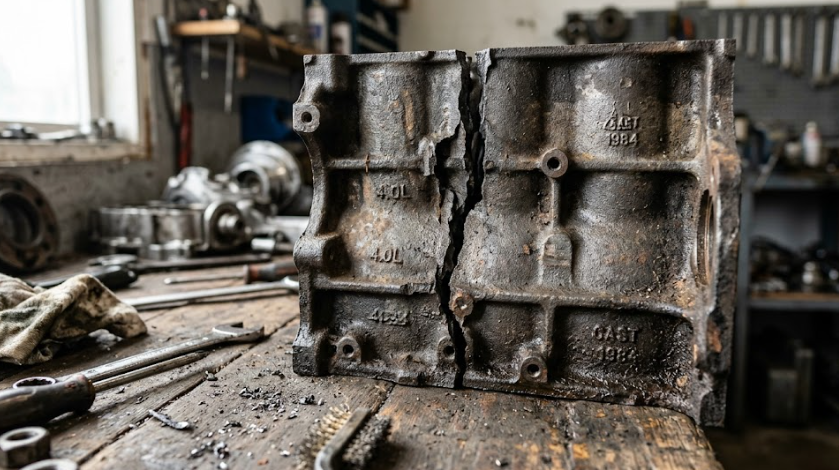
Best Rods and Filler Metals for Welding Cast Iron
Nickel-Based Electrodes (ENi-CI / 99% Nickel)
The standard choice for cast iron repair, offering good ductility and the ability to absorb some of the stress that would otherwise crack a more rigid weld. These rods are also easier to machine after welding, which matters for parts that need finishing work afterward.
55% Nickel-Iron Rods
A stronger but less machinable option, generally used when maximum joint strength matters more than the ability to drill or grind the repair smooth afterward.
Mild Steel Rods (7018, 6011)
Not the ideal choice, but sometimes used for quick, non-critical patch repairs where post-weld strength and crack resistance matter less than getting the part functional again.
Preheating and Cooling: The Two Steps That Make or Break the Weld
Preheating the part to roughly 500–800°F before welding reduces the thermal shock that causes cracking, giving the surrounding material a head start so it isn’t shocked by the sudden heat of the arc. This step matters more on cast iron than on almost any other common metal.
Cooling matters just as much. Wrapping the part in a dry cloth or burying it in sand or vermiculite to cool gradually prevents the rapid contraction that reintroduces the exact cracking risk preheat was meant to avoid. Quenching or letting a freshly welded cast iron part air-cool quickly is one of the most common ways a repair fails within days.
How to Weld Cast Iron: Step-by-Step
- Clean and prepare the crack. Grind a shallow V-groove along the entire crack length, extending slightly past each visible end.
- Preheat the part. Bring it to roughly 500–800°F, judged by a dull red glow in low light or with a temperature-indicating crayon.
- Weld in short stitches. Run welds of about 1–2 inches at a time rather than a single continuous bead, which limits how much stress builds up in one area.
- Peen each stitch while it’s still hot. Lightly hammering the weld immediately after laying it helps relieve stress before it has a chance to crack the joint.
- Let the part cool slowly. Cover it or bury it in sand/vermiculite rather than letting it air-cool or quenching it.
Common Mistakes When Welding Cast Iron
- Skipping preheat to save time — this is the single most common reason cast iron repairs crack during or shortly after welding.
- Running one long continuous bead instead of short stitches — concentrates heat and stress in a way that increases cracking risk.
- Using mild steel rod on a structural repair — works in a pinch for non-critical patches, but nickel rod gives a stronger, more reliable bond for anything load-bearing.
- Skipping peening between passes — peening relieves stress as you go; skipping it lets that stress accumulate until the joint cracks.
- Quenching or rushing the cooldown — undoes the benefit of careful preheat and reintroduces the exact thermal shock you were trying to avoid.
Wrapping Up
Welding cast iron successfully comes down to three things working together: a nickel-based rod suited to the job, controlled preheat before you strike an arc, and slow, managed cooling once the weld is done. Skip the prep work and even the right rod won’t save a repair that’s fighting cast iron’s tendency to crack under thermal stress.
Frequently Asked Questions
What’s the best thing to weld cast iron with?
A nickel-based electrode, often called 99 nickel rod, is generally considered the best filler metal for cast iron because it’s strong, machinable after welding, and more forgiving of the stress that builds up during the weld. 55% nickel-iron rod offers more strength but less machinability for jobs where that tradeoff makes sense.
Why is it difficult to weld cast iron?
Cast iron’s high carbon content makes it brittle and prone to cracking from the rapid, localized heating and cooling that welding involves. The heat-affected zone right next to the weld is especially vulnerable, which is why preheat and slow cooling matter so much more here than with mild steel.
Can I use 7018 to weld cast iron?
Technically yes, for minor, non-critical patch repairs with proper preheat and short stitch welding, but it’s not the best choice. A nickel-based rod designed specifically for cast iron will give a stronger, more crack-resistant, and more machinable repair than mild steel rod.
Can cast iron be easily welded?
No, cast iron is one of the more difficult metals to weld successfully because of its high carbon content and brittleness. It requires careful surface prep, the right filler rod, controlled preheat, and slow cooling to avoid cracking — skipping any of those steps significantly raises the chance of failure.
Do you need special rods for cast iron welding?
Yes, nickel-based electrodes are strongly recommended over standard mild steel rods. They’re formulated specifically to handle cast iron’s brittleness and carbon content, giving a repair that’s both stronger and easier to machine afterward than what mild steel rod can provide.