Key Takeaways
- Welding salary ranges vary enormously by specialty — general structural work starts around $35,000–$75,000 while pipeline welders in the top 10% reach $72,000–$135,000 and experienced offshore underwater welders can exceed $200,000.
- The single highest-impact career move in welding is 6G pipe certification, which opens pipeline work where median income for working pipeline welders, with travel and per diem stacked, is closer to six figures than most expect.
- $100,000 a year welding is genuinely achievable — pipeline certification, CWI inspection credentials, union membership, or offshore work are the most reliable paths there.
- $300,000 as a welder is possible but rare, generally requiring elite underwater welding experience, offshore hazard pay, and often supervisory responsibilities layered on top.
- There’s no solid evidence that welding itself shortens life expectancy — long-term risks trace to inadequate fume and UV protection, not the trade itself.
Is Welding a Good Career for Money?
Yes — with a clear caveat. Welding as a general starting point pays reasonably, but welding as a career with specific certifications and targeted specialty work pays considerably more than most people expect from a trade. The industry faces a documented shortage of over 400,000 unfilled welding positions, with experienced welders retiring faster than new ones are training, which creates real negotiating leverage for skilled, certified welders across nearly every specialty. The gap between what a general shop welder earns and what a 6G-certified pipeline welder earns isn’t a small percentage — it can be a doubling or more of base pay, often before overtime and per diem are counted.
The honest framing: welding is a good career for money if you treat certification and specialization as deliberate career decisions rather than optional credentials to pursue when convenient.
What Field of Welding Pays the Most?
The highest-paying welding fields, in rough order of earning potential:
Underwater Welding (Commercial Diving)
The widest pay range and highest ceiling in the trade. Underwater welders top the list at $40,000–$200,000+, with experienced offshore divers at $100,000+ being realistic rather than exceptional. In the Gulf of Mexico, the heart of underwater welding work in America, you can easily make over $100,000 once you have a few years of experience. Alaska pays expert divers between $120,000 and $150,000 for just half a year of work due to hazard pay for extreme cold and remote locations. The commercial diving fatality rate is approximately 40 times higher than general construction — that risk premium directly drives the compensation.
Pipeline Welding
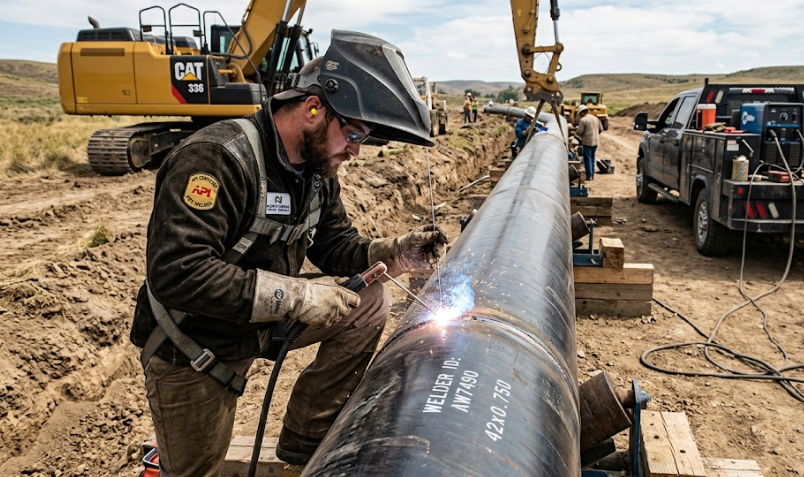
Pipeline and rig welders earn $50,000–$135,000, with pipeline welders in Texas oilfields earning a median of $48,000–$53,000, while the top 10% reach $72,000–$135,000. The union pipeline picture adds specificity: the 2025–2026 Pipeliners Local 798 wage scale sets Journeyman High Scale at $52.07–$53.00 per hour depending on state, plus $165 per day per diem for welders — meaning with travel and per diem stacked, six figures is the median for working pipeline welders, not the ceiling.
Certified Welding Inspector (CWI)
Moving off the tools into inspection and quality assurance, CWIs typically earn $70,000–$110,000, with less physical demand and more longevity — a natural transition point for experienced welders as the physical demands of production welding accumulate over decades.
Aerospace Welding
Tight tolerances, specific certifications, and specialized materials keep aerospace welding pay in the $60,000–$100,000+ range — less variable than pipeline or underwater, but consistently above general fabrication.
Nuclear Welding
Similar pay ceiling to aerospace, with additional hazard considerations and strict qualification requirements that limit the supply of qualified welders and support premium pay.
Can You Make $100,000 a Year Welding?
Yes — this is a realistic target with the right combination of specialty and approach, not an outlier outcome. The most reliable paths there:
6G Pipeline Certification — this single certification unlocks pipeline work where the combination of base wage, overtime, and per diem genuinely puts median working income near six figures for those who follow the work.
Union Membership — union membership adds 25–40% to average wages, pushing the average to roughly $74,896 before overtime, according to current industry data.
Underwater Welding with Experience — a few years of offshore experience routinely produces $100,000+ in the Gulf of Mexico market.
CWI Certification — shifting into inspection work, which can add $30,000 or more in salary jump compared to general welding roles.
Location — historically high-paying states include Alaska ($70,000 average), Hawaii ($68,000), DC area ($67,000), Connecticut ($57,000–$66,000), and New Jersey ($64,000), reflecting both regional demand and cost of living.
The consistent theme: $100,000 welding income comes from stacking specific, learnable certifications in the right market rather than from general experience accumulating over time without strategic direction.
Can You Make $300,000 as a Welder?
This is possible but genuinely rare, and the “$300,000 welder” income figures that circulate online require an honest interpretation before treating them as targets. This level typically requires:
Years of experience fighting currents and challenging conditions, advanced saturation diving qualifications, and work on the most complex and highest-risk offshore installations — the people reaching elite pay are doing some of the most hazardous work in any trade.
In practice, getting to this income level in welding generally requires combining advanced underwater welding credentials with extensive offshore experience, hazard pay for extreme conditions (deep water, Arctic, saturation diving), day-rate contract work rather than salaried employment, and often supervisory or crew management responsibilities layered on top of hands-on welding work. It’s closer to a ceiling reached by a small number of specialists than a realistic median target for anyone entering the field.
Welding Career Paths and Salary Ranges
| Career Path | Typical Annual Range | Key Certification |
| General fabrication/shop | $35,000–$65,000 | AWS CW |
| Structural welding | $40,000–$75,000 | AWS D1.1 |
| Pipeline welding | $50,000–$135,000+ | 6G, API 1104 |
| Rig welding | $60,000–$100,000 | 6G, API |
| Aerospace welding | $60,000–$100,000+ | Specialty certs |
| Certified Welding Inspector | $70,000–$110,000 | AWS CWI |
| Underwater welding | $40,000–$200,000+ | Commercial dive + welding |
How to Build a High-Earning Welding Career: Step-by-Step
- Get foundational certification first. An AWS Certified Welder credential is your entry card — basic certification produces an immediate 10–15% salary bump over uncertified work.
- Add 6G pipe certification as soon as practical. This single credential opens pipeline work and can double your day rate compared to structural shop work.
- Go where the work is. Pipeline, offshore, and oilfield work concentrates geographically — the Permian Basin, Bakken, Gulf Coast, and Alaska. Moving toward demand changes earning potential more than years of experience alone does.
- Layer complementary credentials over time. CWI inspection credentials, NDT certifications, and process-specific qualifications (ASME, API) stack to produce compounding pay increases.
- Let employers pay for expensive credentials once you’ve proven yourself. Getting basic certs, then letting employers pay for the expensive specialized ones, is a more realistic progression than front-loading every certification before earning.
Why Do Welders Not Live Long?
There’s no solid evidence that welding itself shortens life expectancy. Long-term health risks in the trade — including elevated risks from fume exposure and UV radiation — trace directly to inadequate protective equipment use rather than the work itself. Welders who consistently use respirators, fume extraction, and correctly shaded helmets largely avoid the health effects that underlie this persistent myth.
One honest career consideration worth naming: physically demanding welding roles — production welding, pipeline work, outdoor structural positions — accumulate wear on knees, shoulders, lungs, and hands over decades. Experienced welders who plan a 30-year career typically migrate toward inspection (CWI), supervision, or contractor ownership before their bodies force the issue, which is itself a career path worth building toward rather than an admission of failure.
Common Mistakes When Thinking About Welding Income
- Treating general welding experience as the path to high pay — years of uncertified shop welding rarely produce the salary jumps that specific certifications unlock in a fraction of the time.
- Underestimating per diem and overtime as real income — pipeline welders’ actual annual income often significantly exceeds their base hourly rate once travel pay and overtime are counted.
- Targeting underwater welding income without accounting for the realistic entry path — you need commercial diving certification alongside welding credentials before the pay premium kicks in.
- Ignoring location as an income variable — the same certification pays meaningfully differently in a rural market versus an oil-producing hub.
- Assuming physical longevity without a transition plan — the welders who build the most long-term financial security typically plan a career arc toward inspection, supervision, or contracting rather than assuming production welding continues indefinitely.
Wrapping Up
Welding income is far less about the trade itself and far more about which certifications you hold, which specialty you target, and where you’re willing to work. 6G pipe certification is the single highest-leverage credential for most welders chasing higher pay — it opens the pipeline market where median working income genuinely approaches six figures before exceptional outcomes are even considered. Build the certification deliberately, go where the demand is, and plan a career arc that accounts for the physical reality of decades in the trade.
Frequently Asked Questions
What field of welding pays the most?
Underwater welding has the highest ceiling at $40,000–$200,000+, followed by pipeline welding at $50,000–$135,000, certified welding inspection at $70,000–$110,000, and aerospace and nuclear welding at $60,000–$100,000+.
Can you make $300,000 as a welder?
Yes but it’s genuinely rare, generally requiring elite underwater welding credentials, extensive offshore experience, hazard pay for extreme conditions, and often supervisory responsibilities — it’s a ceiling reached by a small number of specialists rather than a typical career outcome.
Can you make $100,000 a year welding?
Yes — 6G pipeline certification, union membership, offshore underwater welding experience, CWI inspection credentials, and high-demand locations all represent realistic paths to six-figure welding income.
Is welding a good career for money?
Yes, with the caveat that the income range varies enormously based on certification and specialty — general shop welding and pipeline welding with 6G certification are both welding careers, but their pay profiles are very different.
Why do welders not live long?
There’s no solid evidence that welding shortens life expectancy. Long-term health risks come from inadequate fume and UV protection, not the trade itself, and welders who use proper PPE consistently largely avoid the outcomes this myth describes.